Reconciliation Dinner Brings Community Together
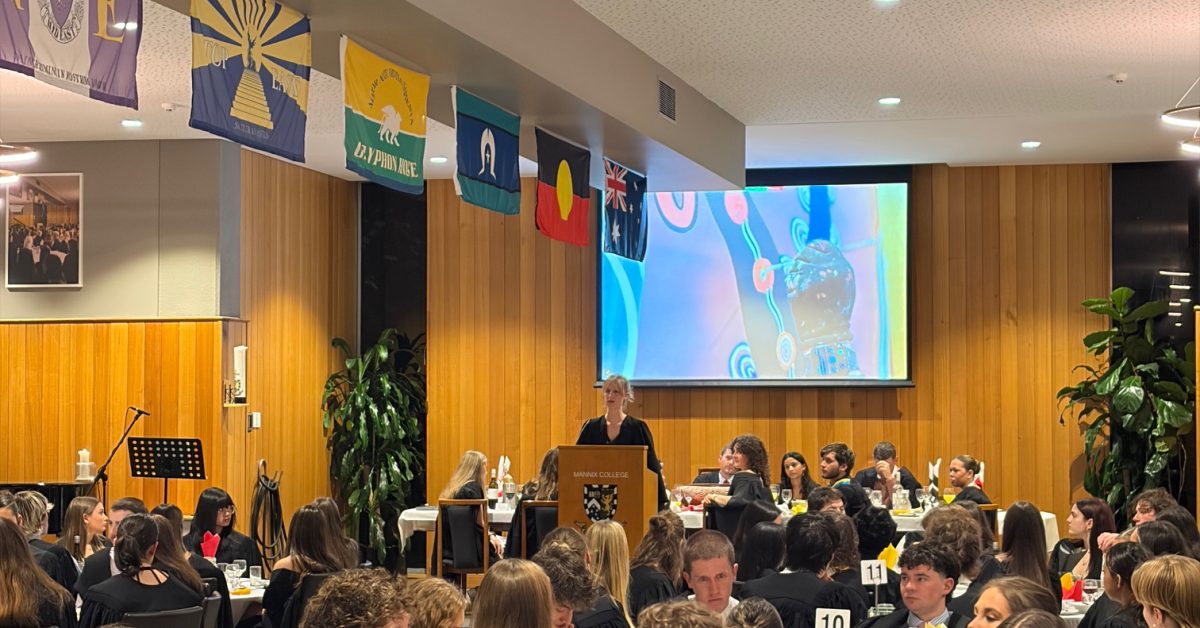
On May 21, we were proud to host our third Annual Reconciliation Formal Dinner, an evening dedicated to reflection, learning, connection, and meaningful conversation.
The event brought together residents, staff, Indigenous alumni, and former members of the Indigenous Advisory Committee to reflect on the ongoing journey of reconciliation and the role each of us can play in creating a more respectful, informed, and inclusive community.
A highlight of the evening was a powerful address from Chair of the Indigenous Advisory Committee and Indigenous student, Caitlin Cleary, whose keynote challenged attendees to think more deeply about truth-telling, allyship, and the histories that continue to shape contemporary Australia.
Keynote Address, Caitlin Cleary
“What do you really know about this Country?
Not the Australia from school textbooks – the real one.
What parts of our history have you never been told?
And what parts have you been told so many times that you’ve never stopped to question them?Good evening everyone. My name is Caitlin – I’m a Dharawal Wiradjuri woman and the chair of the 2026 Indigenous Advisory Committee. Tonight we’re lucky enough to be joined by some incredible alumni and friends of the college who have paved the path I am walking on now.
Let me ask you a few things, and I want you to sit with the first answer that comes to mind.
What is Reconciliation?
What is National Reconciliation Week?
What does truth-telling actually mean?
Do you know any First Nations people? And if you do, how do you know that they’re First Nations?
What happened in 1969? And no, I’m not talking about the founding of Mannix.Did you know this continent was invaded?
Most of us were taught a version of history that made these questions feel simple, clear cut. School gave us that classic colonial script, with massacres and the Stolen Generation spoken about like distant tragedies, things of the past. Saying they were horrible, yes – but over.
Listening to real people’s stories will shatter that illusion.
Here’s an example for you. My grandfather’s adopted brothers, who are still alive today, were taken from their mothers as infants. They were placed in an inhumane “orphanage”, mistreated and abused until my Aboriginal, but white-passing, great-grandparents found them. The trauma they suffered in their early lives has never healed. One uncle has been lost to the Australian jail system, the other so fearful of the world that he’s unable to leave their childhood home. They have never been reunited with their birth families. This isn’t ancient history.
Every year, National Reconciliation Week runs from the 27th of May to the 3rd of June. These dates mark two turning points: the 1967 referendum, when Australians voted to remove discriminatory clauses from the Constitution, and the 1992 Mabo decision, which finally recognised native title and overturned terra nullius.
This year’s theme is “All In.”
“All In” means we stop pretending that truth-telling is optional. It means acknowledging what happened, what still happens, what was taken, and how those impacts continue today.
It means recognising that the Stolen Generation didn’t happen in some distant century. My great uncles were part of it, in fact, the practice only officially stopped in 1969. That’s only 57 years ago. There are many people in this room whose parents are older than that.Truth-telling isn’t about guilt. It’s about responsibility, a shared responsibility, to understand the systems we inherited and the inequalities they still produce.
And for those of you who see yourselves as allies, or want to start being one, I would like to pose another question.
Is your allyship defined by your actions, or by how you want to be perceived?
Because looking like an ally is easy. Being one is a lot harder.
True reconciliation isn’t just a sticker on your laptop, an outfit, a poster, a formal dinner, or a single week of the year.“All In” means showing up, not just dressing up.
It means calling out casual racism among your friends.
It means learning about local culture and local language like our words of the week
It means supporting First Nations voices
It means being an ally even when it’s uncomfortable or inconvenient.One of the small but meaningful ways we practise this at Mannix is through our Acknowledgements of Country. They’re not just a formality. They recognise that we are on unceded Aboriginal land. They honour ongoing connection to Country. They counter a long history of erasure by bringing truth into everyday spaces. They shift mindsets from the colonial idea that Australia began in 1788 to the reality that we are lucky enough to live and work on Country shaped by the world’s oldest living culture.
This year, after training with the wonderful Ashlyn Mayes, our leadership team has been practising Acknowledgements that are personal and grounded in the moment, not just read off the same script. This shifts the tone from an admin point at the start of a meeting, to a thoughtful pause to reflect.
Because they should be a responsibility.
A moment of truth.
A moment of respect.
A moment to remember whose Country we’re on, and what has happened here.I’ve talked a lot about truth-telling and learning, but that can feel overwhelming if you don’t know where to begin. If you’re lucky enough to have a conversation about reconciliation with an Aboriginal or Torres Strait Islander person, please listen deeply and be curious. Seek out knowledge online. Read books. Listen to podcasts. Even just scan the QR codes in the foyer and find out what Country you grew up on, and learn about that culture. Soon there’ll be an education board in the library kitchen too, for something to read while you make your late-night study coffee.
And if you’re curious not just to learn, but to contribute, tomorrow you’ll have the chance at the painting session for our Together We Grow tiles. Whether you’re already a consistent ally, whether you’ve never thought about any of this before, or even if you’ve always carried a quiet curiosity – you’re invited to join us tomorrow afternoon from 3 until 7:30 in the Fitz. Learn about the college’s response to the devastation that followed the Voice referendum, read the oath, solidify yourself in Mannix history as someone who cared. Someone who was eager to learn and to grow.
If reconciliation is going to mean something, then we have to be all in.All in for truth. All in for action. All in for respect.
Not just today.
Not just this week and next week.
Every day that we walk on this Country.”
Continuing the Conversation
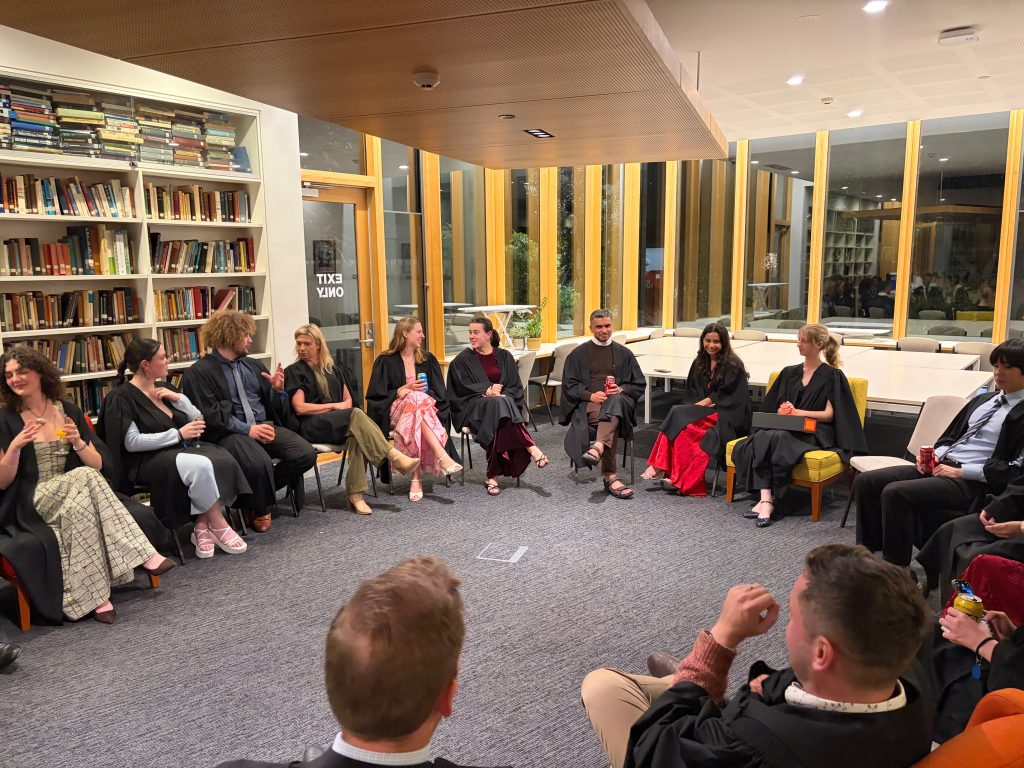
Following the formal dinner, selected residents were invited to participate in a private Q&A session, inspired by the format of You Can’t Ask That, featuring Indigenous Old Collegians Tom Molyneux (2010) and Ashlyn Mayes (2024). The session was designed as a respectful and confidential space where attendees could ask honest questions and engage in thoughtful conversations around reconciliation, allyship, identity, and cultural understanding.
The discussion highlighted the importance of creating spaces where people feel comfortable asking questions, listening deeply, and engaging with different perspectives in good faith.
We thank Caitlin Cleary, Tom Molyneux, Ashlyn Mayes, our Indigenous alumni, former members of the Indigenous Advisory Committee, and all attendees for contributing to an evening of thoughtful dialogue and shared commitment to reconciliation.
As we continue this journey together, events like these remind us that reconciliation is not a single moment, but an ongoing process built through learning, respect, relationships, and action.