Respect, Reflection, and Responsibility
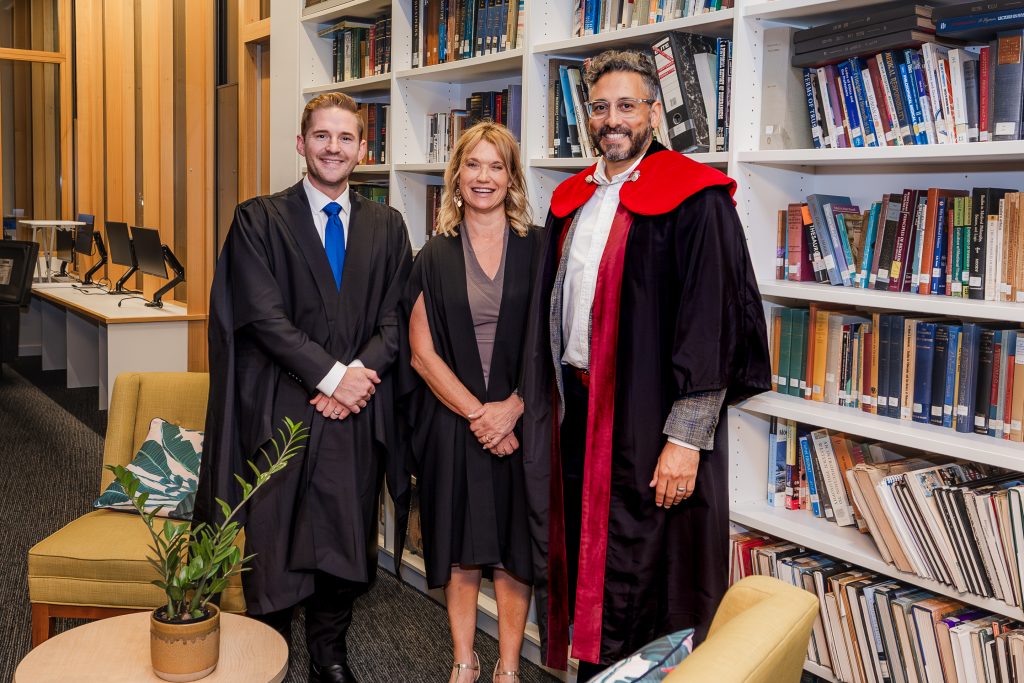
“Professor Roberts’ address, alongside the opportunity for residents to engage in critical dialogue, illuminated how hegemonic gender norms can undermine healthy relationships, while fostering reflection, empowerment, and a stronger commitment to gender equity within our community.” Dr Tracy Clelland, Vice Principal and Dean of Students.
At the 2026 Respect Formal Dinner, Professor Steve Roberts challenged residents to examine how everyday experiences shape ideas about masculinity—and how people can actively reshape them. Grounded in a career focused on creating opportunities for young people to better understand how gender norms are produced, his work aims to promote safe, healthy, and equitable relationships. Drawing on his research into young people, social change, and the influence of spaces such as the “manosphere,” Professor Roberts explored how rigid gender expectations can place pressure on young men to behave in certain ways—often limiting emotional expression, help-seeking, and meaningful connection. Importantly, his message was not about blame, but about possibility: creating space for more flexible, respectful, and inclusive ways of being.
Building a Culture of Respect at Mannix
The formal dinner itself provided a meaningful setting to engage with these ideas. Events like this are not just about a single conversation, but about building a culture—one grounded in respect, equity, diversity, and inclusion. Through shared experiences and ongoing dialogue, residents are supported to better understand relationships, challenge unhelpful norms, and contribute to a community where care and mutual respect are central. The evening was further strengthened by the presence of the Mannix College Respect Advisory, the Monash REDI team, and the Safer Communities Unit, whose work in gender equity and respectful relationships reinforces a shared commitment across Mannix College and the University.
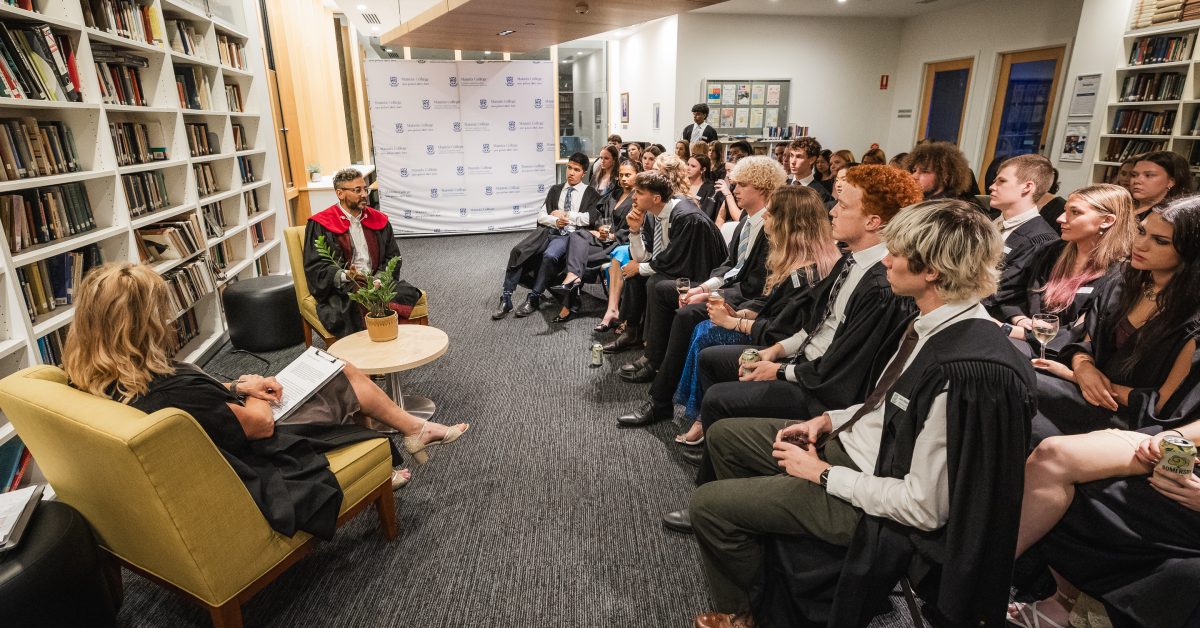
An important follow-up discussion in the library allowed selected residents to delve more deeply into these themes and ask thoughtful questions about the impact of rigid gender norms on relationships, mental health, and community life. Students explored concepts such as the “Man Box”—a set of social expectations that can restrict how men think, feel, and behave—and reflected on how these pressures show up in university settings. The conversation created space for honest dialogue about gender harms, the role of culture and social structures, and how students themselves can be part of meaningful change.
Respect as an Ongoing Commitment
Together, these conversations highlighted that fostering respectful relationships is an ongoing process—one that grows through reflection, dialogue, and the everyday ways Mannixians show up for one another.